














What on earth is Rally??
Rally obedience has gone from being the new kid on the block to an established competitive sport in the dog training world. Rally, the creation of Charles “Bud” Kramer, presents a new take on the traditional obedience exercises. Unlike traditional obedience, where the teams wait for instructions from the judge for each exercise, Rally takes a team through a course of designated exercises. A course consists of 10-22 signs each indicating the exercise to be performed. The dog and handler heel through the course, performing the exercise indicated on each sign. Each course is unique. Exhibitors can talk to and encourage their dogs and, in some venues, feed after the completion of exercises. The rules vary according to the venue.
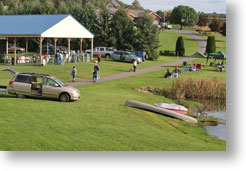
Rally Trials at Great Companions are lots of fun. Click on the images below to see photos from our last two trials.
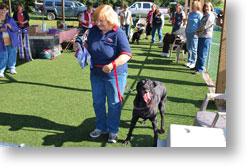
Ali runs Bing in Rally Level 2, at
Great Companions Rally Trial on September 25, 2011
A title is a lasting tribute to your relationship with your dog that will outlast both dog and handler. If you DO choose to compete, Great Companions has a lot to offer. Great Companions classes are taught by one of our two Rally judges, so we know the rules, regulations and guidelines and can help you understand the ins and outs of trialing. All of our instructor’s dogs, and many of our student’s dogs, have Rally titles and Championships and the pretty ribbons that go along with those titles and championships. We love to see our students going on to succeed in this fun sport and will do what we can to help you attain that success.
Trialing for the first time can be quite a stressful experience, for your dog AND for you. Great Companions offers Rally Runthrus on a regular basis, allowing our students to train, practice, brush up or simulate the trial experience so you are not as nervous when you walk into the ring. Our Runthrus are also a great chance to socialize with and get tips from other students and competitors and expose our dogs to a simulated trial environment.
One of the biggest topics of conversation during the Great Companion Runthrus is trialing. Our students and instructors compare notes and plans which trials they will be attending, often meeting at the trial site, sitting together, watching each other trial, cheering on successes and offering encouragement. Great Companion’s students seldom trial alone. We trial as a supportive, enthusiastic group.
Additionally, Great Companions offers semiannual trials at the studio. Our students enjoy trialing “at home” and Great Companions, its owner and its staff enjoy hosting these events.
There are several venues that offer Rally Obedience:
C-WAGS: http://www.c-wags.org/Rally.html
AKC: http://classic.akc.org/events/rally/index.cfm
APDT: http://www.apdt.com/rally/
United Kennel Club
Canatian Rally
Why you and your dog might benefit
from getting involved with Rally:
• I want my dog to listen and behave
• I'm not interested in an "obedience" title
• My dog just likes to run and play
• I really want to do agility
some day
• My dog doesn't always like other dogs
• We thought basic obedience was boring
Click here to find out why Rally may be just what you're looking for!
Even small dogs can do exceptionally well in all levels of Rally. Watch Ali and Tango working together.
Each has slight variations, so it is important to understand the rules and regulations for the organization with which you are trialing
If you are still reading this, you are obviously interested in rally. Please come to class with us!!
Ali
Rally Obedience is not just for the hard core competitor. Several venues welcome mixed breeds, disabled dogs and handlers, veteran dogs and Jr. Handlers. But the skills learned in Rally extend far beyond the ring. Many of the exercises in Rally, such as walking nicely on a leash amidst distractions, heeling around food bowls, turns and stay-recall exercises, have real world applications. Additionally, working on the Rally Obedience exercises in a positive reinforcement based, force free manner can impact your communication with your dog and build your relationship. There is value in learning this dog sport even if you never choose to compete.
Return to COURSES / PUPPY MANNERS / FOUNDATIONS / ADVANCED MANNERS / AGILITY

Rally